Fiscal drag is drawing more UK taxpayers into higher tax bands, despite no formal increases in tax rates. Tax thresholds have remained frozen while salaries and living costs have increased. Clients now face rising liabilities across income tax, inheritance tax (IHT) and capital gains tax (CGT). Understanding this trend is essential for advisers supporting long‑term planning.
What Is Fiscal Drag?
Fiscal drag describes a situation where taxpayers move into higher tax bands as a result of frozen tax thresholds rather than changes to tax rates. Inflation increases wages and everyday costs, but the tax system does not adjust in line with this. As a result, Government tax receipts rise without changes to the headline rates of tax.
Since the Covid pandemic, successive UK Governments have paused inflationary adjustments to income tax, IHT and CGT thresholds. The effect is subtle but material. Clients feel the pressure of rising taxes while seeing little visible policy change.
How Fiscal Drag Has Evolved
A Decade in Data
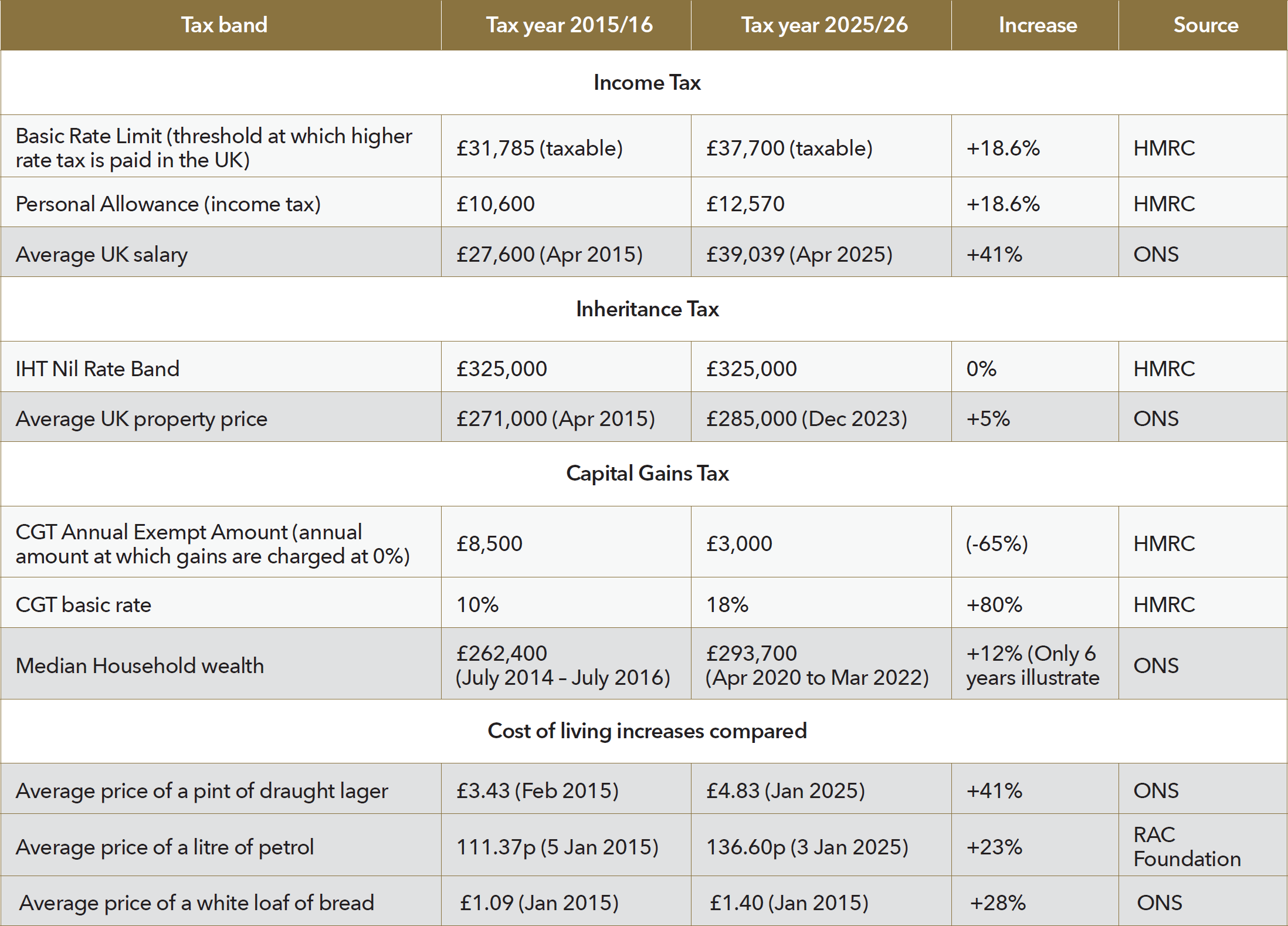
A ten‑year comparison highlights how stagnant thresholds contrast sharply with rising earnings and living costs. For example:
The Basic Rate Limit has increased by only 18.6% since 2015/16, while the average UK salary has risen by 41%.
The IHT Nil Rate Band has been frozen at £325,000 since April 2009, despite property prices increasing by more than 75% over the same period.
The CGT Annual Exempt Amount has fallen by 65%, increasing exposure for clients disposing of assets.
Living costs have risen faster than most thresholds. For example, the average price of a white loaf of bread has increased by 28% and petrol by 23% over a similar period.
These trends show how more UK residents are being drawn into higher tax liability without any actual increases to tax rates.
Implications for Clients
Higher Tax Exposure
Clients who believe their financial position has remained stable may be surprised by their increased tax burden. Salaries and asset values rise to counter inflation, but static thresholds push these increases into higher tax bands. More estates are now within IHT scope, and more individuals are losing access to allowances and paying higher CGT rates.
Erosion of Protective Measures
The Residence Nil Rate Band (RNRB), introduced in April 2017, was designed to help homeowners. It has remained fixed at £175,000 since April 2020. As property prices continue to rise, the RNRB protects less value each year, pulling more families into the IHT net.
Planning Opportunities for Advisers
Using Insurance‑Based Wealth Solutions
Life insurance‑based wealth solutions can offer important benefits where fiscal drag persists. These products allow clients to defer taxation within the policy, creating opportunities to:
Manage income tax exposure through tax‑deferred growth
Time future tax points more effectively
Support intergenerational planning
Case Study Insights
Read the case study, Managing Fiscal Drag and Inheritance Tax in the UK. It follows a returning UK resident and shows how an overseas insurance bond, supported by discretionary management, segmentation and trust planning, can mitigate fiscal drag, reduce IHT exposure and support flexible wealth transfer. It provides a practical example of how these solutions work in real client scenarios.
Visit the Case Study Insights section below, or click here
Trusts for Inheritance Planning
Clients can settle their policies into trust structures. This approach can:
Reduce IHT exposure
Support staged transfers to beneficiaries
Maintain control and flexibility across generations
For clients concerned about static tax thresholds, these strategies help counter rising tax friction and provide more predictable long‑term outcomes.
Fiscal drag is currently a feature of the UK tax landscape and continues to pull more clients into higher tax bands. As thresholds remain frozen, advisers play a crucial role in helping clients understand their exposure and adopt strategies that protect long‑term wealth. Insurance‑based wealth solutions, combined with appropriate trust planning, offer a practical way to defer tax, mitigate IHT and provide flexibility across generations. With the right structure in place, clients can manage rising tax pressures with confidence and retain greater control over their financial future.
Key Takeaways for Advisers
Frozen thresholds are increasing clients’ tax liabilities across income tax, CGT and IHT.
Rising salaries and asset values accelerate the impact of fiscal drag.
Insurance‑based wealth solutions offer tax deferral when thresholds do not keep pace with inflation.
Trust arrangements can reduce IHT exposure and support long‑term succession planning.
Advisers should review existing plans to identify clients now at risk of crossing tax thresholds.
Read the case study to learn how these strategies work for clients returning to the UK.