
In a market shaped by rising regulation, rapid technology change and client mobility, choosing the right life company is critical. Life policies endure for decades and underpin multi-generational planning, so early exits can trigger tax consequences and disrupt strategies.
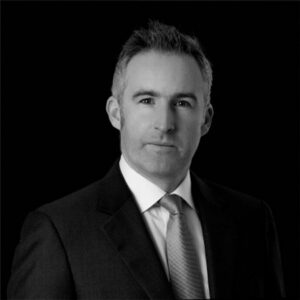
In this interview, Aidan Golden speaks with Paul Thompson, CEO of Utmost, on what defines a resilient life company. Marking ten years since the Utmost brand launch, Paul shares insights on financial strength, technical expertise and strategic commitment, and outlines three trends set to shape the industry in 2026 and beyond.
AG: Paul, Utmost has built a reputation for strength and reliability in the international life market. What do you think sets us apart from other providers?
PT: For me, it’s two things: financial strength and technical capability. Clients and advisers need confidence that the life company they select will be there for the long term and Utmost ticks that box. Beyond that, we have the expertise to handle the most complex cases which can often include multi-jurisdictional planning, alternative assets and bespoke tax structuring. These are the areas where we excel and that combination of stability and technical depth is key.
AG: When you talk about “complex cases” what does that mean in practice?
PT: Well, to start, true simplicity is becoming rare. In recent years, almost every case we see carries some element of complexity. Clients are increasingly internationally mobile with assets and family members spread across multiple jurisdictions. Others use sophisticated trust structures or have plans to relocate, which introduces layers of tax and regulatory considerations. These scenarios often involve significant sums and demand absolute precision. That’s where our technical team comes in as we work with clients and advisers to design solutions that are robust and tailored to each objective. It’s never just about issuing a policy; it’s about engineering the right outcome for the long term.
AG: Knowing what you know about life companies from the inside, what are the key focus points for choosing a provider?
PT: It’s one of the most important decisions an adviser or client will make. These policies are long-term commitments over 15, 20 years or more and exiting early can trigger unplanned tax consequences. The choice of provider must be evidence-based. Look beyond the marketing gloss and focus on two things: financial strength and strategic intent. These are the foundations of reliability.
AG: So, size and strength are the key factors?
PT: Absolutely. Think of it this way: when you are entrusting a provider with your clients’ assets, why take an unrewarded risk? Choosing a financially weaker insurer offers no upside and only greater downside exposure. By contrast, Utmost’s financial strength is independently validated. Each of our insurance companies individually holds a Fitch A+ Insurer Financial Strength rating, a clear external endorsement of our stability and our ability to meet policyholder commitments over the long term.
Many other insurance providers in our markets depend on a parent company rating or a point-in-time guarantee of their support. That raises legitimate questions about long-term commitment and structure. These are questions advisers increasingly need to be prepared to answer.
When you combine our A+ Fitch ratings with the wider Utmost Group fundamentals including a strong solvency coverage position and more than £100bn in assets under administration the picture becomes even clearer. Utmost has the scale, robustness and financial discipline to deliver for clients not just today, but for decades to come. In today’s environment, regulators and PI insurers will expect advisers to justify their choice so why take a risk?
AG: What are your thoughts on how important investment in the business is? Why does this matter?
PT: Investment is critical. Servicing a policy isn’t just about issuing it today and forgetting about tomorrow. A life company needs to commit to potentially supporting clients for decades. That means handling assignments or changes of custodian or investment strategy as well as assessing portability when clients move countries. Companies that don’t invest or aren’t core to their parent group often suffer from a lack of functionality. Investment in systems, people and processes is non-negotiable and sits at the heart of our strategy in Utmost.
AG: These products can be perceived as expensive. How do you respond to that?
PT: The benefits which include tax efficiency, succession planning and investment growth are significant, but delivering them comes at a cost. Life companies are expensive to run because they need to maintain solvency margins, provide accurate administration and ensure compliance across multiple jurisdictions and with international regulators. In the last decade, the need for investment in technology and cyber security has increased tenfold. Add to that the need for highly qualified technical teams covering the tax and regulatory aspects of all our international markets and products and you can see why ongoing investment is essential.
AG: And profitability? How do you balance that with investment?
PT: Like any commercial business, we need to make a profit for shareholders – but the key is balance. We reinvest heavily to ensure long-term sustainability. That’s why profitability matters as it gives us the ability to invest today and the strategic intent to keep building for the future.
AG: Looking ahead, what do you see shaping the future of international life assurance?
PT: As we turn the page and move into 2026, three big themes stand out. First, the rise of alternative investments, as clients increasingly look beyond traditional asset classes. Life companies must ensure flexibility and robust governance to accommodate these strategies safely. Second, the influence of artificial intelligence. AI is already transforming how we process data, assess risk and deliver personalised solutions. It will enable faster, smarter decision-making, but it also raises questions about transparency and ethical use, which we take very seriously. Finally, the need for security and technology investment will only intensify. Cyber threats are evolving, regulatory demands are increasing and clients expect seamless and compliant engagement and for the data to be safe with us.