
In his Technical Spotlight article, Brendan Harper highlights why planning undertaken in isolation can appear effective at a local level, yet fail once cross-border considerations are introduced.
In this case study Brendan brings that point into focus, showing how a succession structure that worked well in one jurisdiction began to unravel as the client’s residency and tax profile changed, and why a more integrated, portable framework was ultimately required.
The Client
The client is a high-net-worth individual who has lived in Dubai for many years. Over time, he built significant wealth across Dubai real estate, bankable assets and private equity holdings.
As he approached retirement, he planned to relocate to Portugal. A key objective was to ensure that his Dubai-based assets would not fall under Sharia succession rules on death.
This marked an important trigger for structural change, shifting the planning focus from a single jurisdiction to a cross-border context.
The Solution
Step 1 – A locally effective solution in Dubai
To address succession concerns under Dubai law, the client’s advisers recommended establishing a family foundation under the Dubai International Financial Centre (DIFC) framework. The structure offered certainty based on English law and allowed the client, as founder, to retain control through the foundation’s charter and by-laws.
At a local level, the solution was effective. It resolved the immediate succession concern and provided governance within a familiar legal environment. The advisers also recommended transferring the client’s wider wealth into the structure to consolidate assets.
Step 2 – Where fragmented planning emerged
A critical factor was not fully addressed: the client’s planned relocation to Portugal.
While suitable for Dubai, the DIFC foundation has no formal recognition under Portuguese law. Once the cross-border dimension was introduced, the structure created uncertainty around tax classification and regulatory treatment.
From a Portuguese perspective, potential outcomes included classification as a controlled foreign company (CFC), triggering annual taxation of underlying income and gains at marginal rates that can reach 53%. Alternatively, the structure could be treated as a fiduciary arrangement, giving rise to outcomes that may include:
- Capital gains tax on winding up and distribution to the founder
- A standard 28% tax rate, increasing to 35% for blacklisted jurisdictions, which can include certain DIFC structures
- Stamp duty of 10% on certain cash distributions to Portuguese resident beneficiaries
- Income tax treatment for ongoing distributions, potentially including both capital and gains
This stage of the case highlights a recurring theme across cross-border planning: a solution designed in isolation can introduce new risks when mobility and regulatory interaction are not considered from the outset.
Step 3 – Introducing a holistic anchor for mobile capital
For the client’s liquid portfolio, a more integrated and portable solution would be the use of a Portuguese-compliant life insurance policy. While certain assets, such as direct real estate, may need to remain outside the policy and be planned for separately, life insurance can provide a stable framework for mobile capital.
This approach aligns with the broader planning theme explored in my article, positioning life insurance as a central framework capable of supporting investment management, tax efficiency and succession planning across jurisdictions.
The Benefits
Using a Portuguese-compliant life insurance policy for the liquid portfolio can provide:
- Alignment with Portuguese law and established market practice
- Gross roll‑up, with no tax until withdrawals are made
- Taxation on gains only, with original capital treated as a return of capital
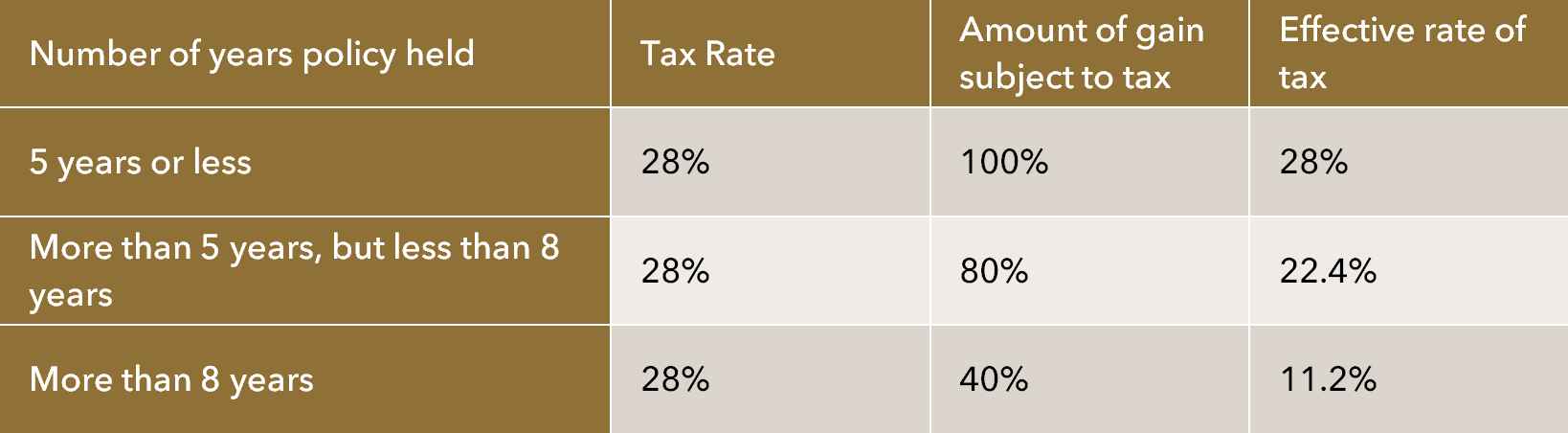
- Reduced effective tax rates for long-term holding, subject to premium structuring rules (e.g. where at least 35% of premiums due are paid in the first half of the policy term):
- Beneficiary nomination, supporting efficient wealth transfer on death and potentially outside the policyholder’s estate
- The ability to defer payment of death benefits where controlled distribution is required
This case demonstrates how planning undertaken in isolation can solve a local issue but unravel when cross-border touchpoints arise. An insurance-based solution can act as a bridge across jurisdictions when tax and estate planning need to work together.