
Repartition of rights1 is a traditional tool for wealth structuring in France. Following the introduction of article 774 bis of the French Tax Code, the clarifications provided by the French tax administration highlight and reinforce the advantages of insurance solutions when dealing with repartition of rights.
Concept of Repartition of Rights
The concept of repartition of rights in French law is based on the distinction between different uses of an asset. When you can use an asset and receive the income it generates, you benefit from the “usufruct” and are the “usufructuary”2 of this asset. However, you do not own the asset, which belongs to the “bare owner.”3
For example, the usufructuary of a car can drive the car, receive rental fees, or earn income from carpooling. However, the car’s value belongs to the bare owner.
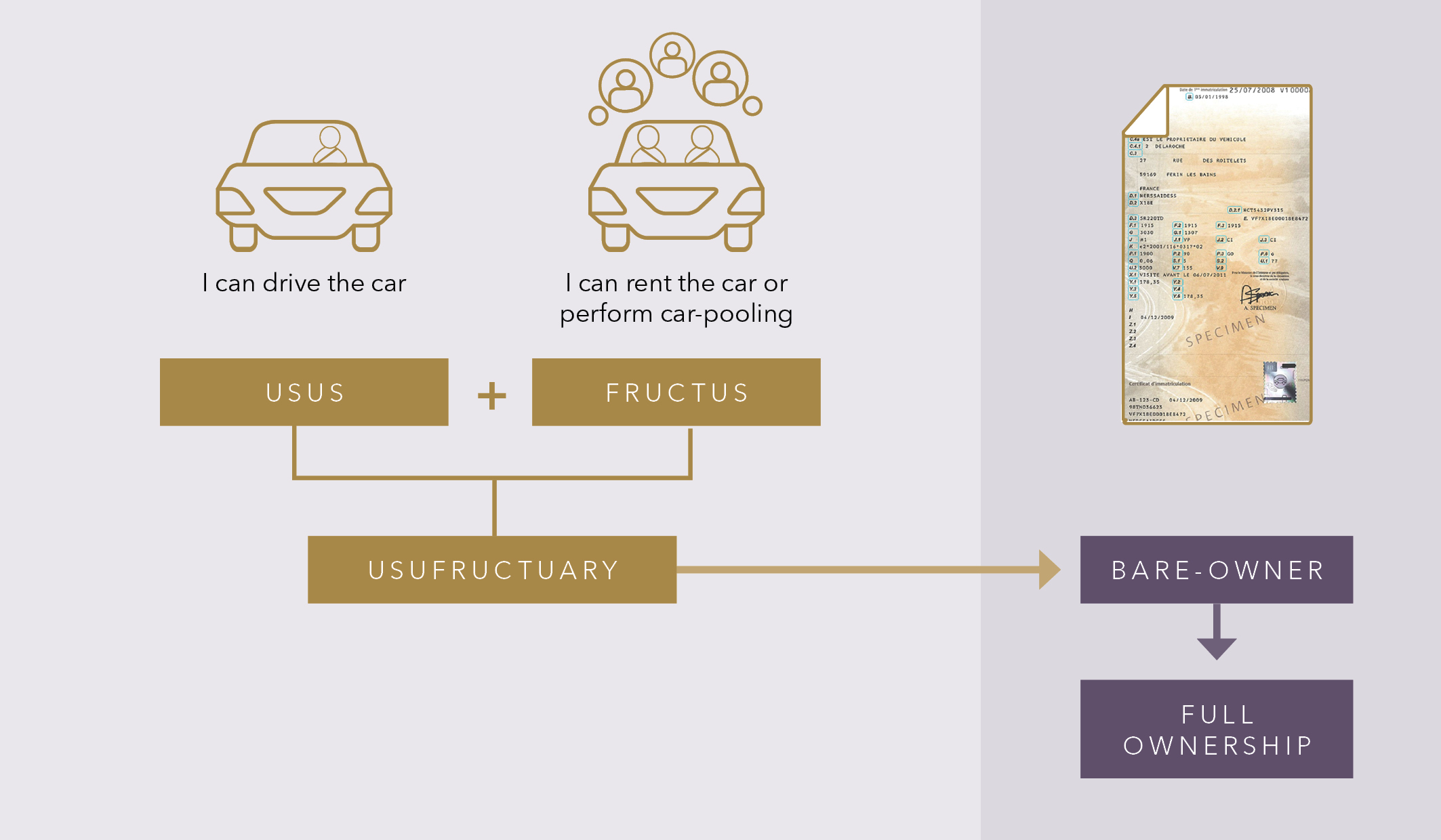
When this concept is applied to fungible assets, such as money or life insurance death proceeds, a “quasi-usufruct” is created. This means the usufructuary can fully enjoy the assets but must refund the bare owner with identical assets. For money, the usufructuary can use it during their lifetime but is obliged to refund the bare owner upon their death. Legally, this obligation to refund constitutes a debt. Previously, this debt was fully deductible from the usufructuary’s estate.
Positive Tax Impact of Repartition of Rights
When gifting the bare ownership of an asset, the taxable basis for gift tax is limited to the value of the bare ownership.
Even if the repartition of rights is not set up for tax purposes, it results in the bare owner recovering full property of the assets at the usufructuary’s death without additional gift or inheritance tax. The value of the usufruct is exempt from these taxes.
If the asset subject to repartition of rights is sold, the parties have several options:
- Split the sale price between the usufructuary and the bare owner – in practice each owner will recover a right in full ownership.
- Keep the repartition of rights over the sale price and reinvest it in an asset held with repartition of rights.
- Create a debt from the usufructuary to the bare owner.
While this debt was fully deductible in the past, Article 774 bis introduces some distinctions.
Provisions of Article 774 bis of the French Tax Code
The deductibility of the debt depends on how the repartition of rights was created. There are three cases:
- Debt from the gift of bare ownership by the usufructuary of money is no longer deductible, without any exception.
- Debt from the sale of an asset where bare ownership was initially gifted by the usufructuary is deductible only if it can be demonstrated that the debt was not created mainly for tax purposes. Evidence should show that there was a significant delay between the creation of the repartition of rights and the sale of the assets, proving that the gift of bare ownership was not primarily for tax purposes.
- Debt from repartition of rights resulting from an inheritance option or matrimonial arrangement is fully deductible.
Positive Outcomes of the Tax Administration Doctrine4 for Life Insurance and Capitalisation Contracts
It is common to create a repartition of rights to life insurance death proceeds using a beneficiary designation. The French tax administration clarified that the creation of a quasi-usufruct debt via a beneficiary designation is excluded from the scope of Article 774 bis.